When the bone and cartilage dividing your nasal cavity is off center or crooked, the condition is referred to as a deviated septum. If the deviation is serious enough, it can cause breathing difficulties and chronic sinus conditions that require treatment.
What Causes a Deviated Septum?
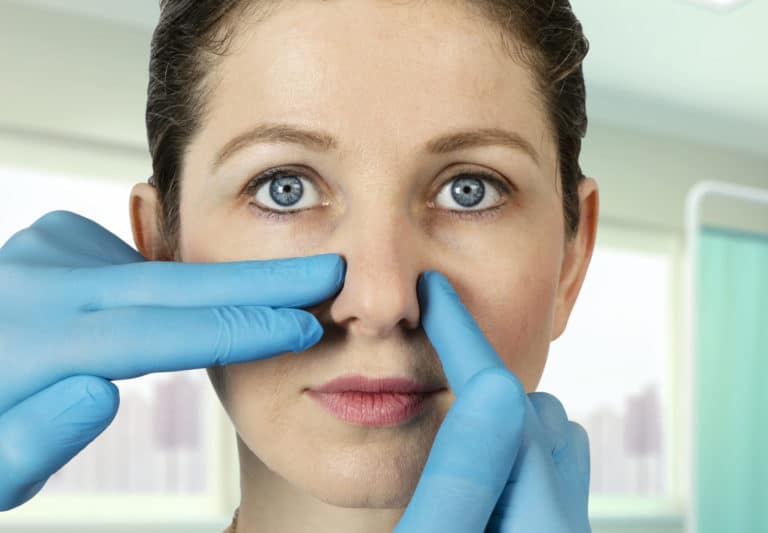
Most often, a deviated septum is a condition that occurs during birth or fetal development. In other cases, trauma or injury to the nose causes the displacement. This is frequently the result of a sports injury or automobile accident. Occasionally, cartilage in the nasal tip deteriorates as we age, producing a deviated septum.
What Are the Symptoms of a Deviated Septum?
The perfect nasal septum divides the left and right nostrils evenly, but this is pretty rare; it’s estimated that about 80 percent of the population has a septum that is off center to some extent. Usually the deviation is slight and goes unnoticed; only the worst cases produce symptoms that affect breathing.
Symptoms include nasal congestion (often limited to one side of the nose), frequent nosebleeds and sinus infections, facial pain and pressure, headaches, postnasal drip, and noisy breathing or snoring during sleep.
How Is a Deviated Septum Treated?
If the deviated septum isn’t too severe, symptoms may respond to treatment with medications. Antihistamines, decongestants and nasal steroid sprays can reduce congestion and inflammation in some patients.
When medicines are ineffective, a surgical procedure known as a septoplasty may be necessary to reposition a crooked septum and improve breathing. This involves removing excess bone or cartilage in order to create a larger breathing space, and is typically performed in an outpatient setting using local or general anesthesia.
A rhinoplasty – surgery to reshape the nose – is often performed at the same time.
In order to prevent a deviated septum, protect your nose from injury whenever possible. Wear a helmet or facial protection when playing sports and never ride in a motor vehicle without wearing a seatbelt.
Call ENT of Athens at (706) 546-7908 for more information or to schedule an appointment.